Se dice que la música es el lenguaje universal del mundo. El simple sonido de un solo tambor puede provocar movimiento en cualquiera. Pero hay una razón sólida de por qué la música es instrumental para la alfabetización temprana en los niños. La conciencia fonológica, o la idea de que las palabras tienen sonidos específicos divididos en sílabas, es un concepto esencial que los niños deben adquirir antes de aprender a leer. La música es una herramienta maravillosa y eficaz para que los niños adquieran esta habilidad. Los instrumentos musicales, cantar canciones como “La Araña Pequeñita” y la simple tarea de aplaudir las sílabas de una palabra como su nombre pueden ayudar a su peque a dominar esta habilidad rápidamente.
En la literatura infantil, la conciencia fonémica se puede desarrollar a través de libros con rimas y palabras que se centran en un sonido específico. Por ejemplo, en el libro “Jaja, Ji, Quack“, la repetición de la línea “Jaja, Ji, Quack” ayuda a los niños a concentrarse en el sonido de la letra “J”. Otra forma de aumentar la conciencia fonológica es encontrar libros donde los niños puedan adquirir conocimientos alfabéticos o la capacidad de familiarizarse con el alfabeto. Chica Chica Bum Bum es un favorito para nosotros los narradores de cuentos porque tiene un gran ritmo y la melodía es tan pegadiza que los niños aprenden el abecedario en tiempo relámpago. Aquí hay algunos otros libros y recursos que puede encontrar en la Biblioteca del Condado de Yolo que aumentarán la conciencia fonológica de su pequeño:
La Cancion del Lagarto por George Shannon
Oso desesperadamente quiere aprender la canción de lagarto, pero por alguna razón no puede cantarla bien. Lagarto le enseña a Oso una nueva canción más adecuada para Oso.
Canción Para Dormir a las Fieras por Paula Carbonell
¡Por una razón u otra los animales de la selva no logran pegar un ojo! Tal vez juntos todos podrán dormir al fin.
Mochila Bilingüe- Música
En esta mochila puedes encontrar varios instrumentos musicales, un libro en español, un libro en inglés y tres libros bilingües.
It is said that music is the universal language of the world. The simple sound of a single drum can elicit movement in anyone. But there’s a sound reason as to why music is so instrumental for early literacy in children. Phonological awareness, or the idea that words have specific sounds broken down into syllables, is an essential concept for children to acquire before learning to read. Music is a marvelous and effective tool for kids to become phonologically aware. Musical instruments, singing songs like “The Itsy Bitsy Spider”, and the simple task of clapping the syllables of your child’s name can help your little one grasp this skill rather quickly.
In children’s literature, phonological awareness can be developed through books with rhymes and words that focus on a specific sound. For example, in the book “Click, Clack, Moo”, the repetition of the line “Click, Clack, Moo” helps children focus on the letter “C” sound. Another way to increase phonological awareness is to find books where kids can acquire alphabetic knowledge, or the ability to become familiar with the alphabet. Chicka Chicka Boom Boom is a storytime favorite for us because it’s got a great rhythm and the tune is so catchy kids learn their ABCs in no time. Here are some other books and resources you can find at Yolo County Library that will increase your little one’s phonological awareness:
Pete the Cat and the Cool Cat Boogie
Pete asks his friends to teach him how to dance; the only problem is he keeps doing it all wrong! Owl’s wise words help Pete the Cat learn that he dances best when he is being himself.
Brilliant Baby Plays Music
Come along with Baby on this journey to learn about all the different types of musical instruments and genres!
School Readiness Kit- Music
This music-themed kit offered by Yolo County Library contains a variety of books in English, Spanish and Russian, CDs with children’s music, and an activity for your little one to enjoy!
Bilingual Backpack- Música
In this backpack, you can find several musical instruments, one book in Spanish, one book in English, and three bilingual books.
It is no secret that anti-immigrant rhetoric has increasingly been normalized over the recent years and utilized as a scapegoat to attack BIPOC (Black Indigenous People of Color) communities. Chimamanda Ngozi Adichie once said: “…show a people as one thing, as only one thing, over and over again, and that is what they become.” Well, the narrative about the job takers, the criminals, the worst of the worst has stuck and it’s here to stay.
Within our own immigrant communities, however, we’ve always heard of the gut-wrenching stories about undocumented children in detention centers. At quinceañeras and family gatherings, we’ve always heard the Tias whispering to one another about how “so and so’s father” had their naturalization certificate torn into little tiny pieces and got taken by the Migra, the border patrol feet away from American soil. We’ve heard of all the atrocities that occur long before any foot is ever set on this imaginary line that separates us from a good and ordinary life.
It wasn’t until July of 2019 when the outcry of activists and whistleblowers finally put a spotlight on these issues for the rest of the country. Reports about the unsanitary and unsafe conditions children as young as five months old endure in these so-called detention centers led to an ongoing conversation that keeps unraveling the harsh reality. The traumatization of undocumented children furthers when they have to face the reality that they might have to appear in court often without legal representation resulting in a high probability of being sent back to the country they fled from or a country that is completely foreign to them.
Whether they are part of the 29,792 unaccompanied minors who were apprehended in the fiscal year 2021 alone or part of the 16.7 million people who have at least one undocumented family member in their household, their story matters and it must be told. However, according to the Cooperative Children’s Book Center (CCBC), which has been documenting statistics on diversity in children’s books, of the 3,682 children’s books they reviewed in 2018, 252 depicted Latinx characters and only 207 books were written or illustrated by Latinx creators. The statistics dwindle for other ethnicities compiled in this report. Unfortunately, there just isn’t any data available that compiles any children’s books dealing with the diverse stories about immigrants, refugees, and undocumented folk.
As Chimamanda Ngozi Adichie has said: “Stories have been used to dispossess and to malign, stories can also be used to empower and to humanize. Stories can break the dignity of a people, but stories can also repair that broken dignity.” These stories should be written accurately and they should be written by those who’ve lived through them. These stories must be told not only so that those who may not understand learn to empathize, but so that those whose legal definition blurs can see themselves reflected and begin to heal some of their trauma.
Here are 5 excellent books I recommend to start off with:
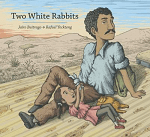
This story is from the perspective of a child who uses counting as a coping mechanism to distract herself from the difficult experiences in her journey to a new country. Though never mentioned in the book, both she and her dad are most likely Guatemalan refugees as Guatemalan worry dolls are shown at the beginning of the book, and illustrations of soldiers are sprinkled throughout the book. She also travels via train, most likely alluding to the infamously dangerous train dubbed as The Beast that runs from Guatemala all the way to the United States.
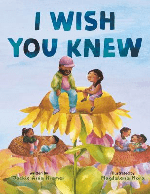
In this story, we follow Estrella whose father has been recently deported to their country of origin. She wishes people around her knew how her life has been affected by his absence. Her teacher notices she is withdrawn and distraught so she creates a safe space to talk about the things Estrella and her other students wish they knew. This gives Estrella the courage to share not only how much she misses her dad but also about the things they did together that brought her joy.
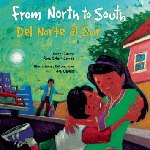
This story parallels Estrella’s story as Jose’s mom is also unexpectedly deported back to Mexico. Jose’s family lives close to The Tijuana US-Mexico border so Jose and his dad travel through the border to see his mom. Mama doesn’t know when she will come back to the United States. Jose and his dad must return to their home in the US without Mama. This is a book that tells the stories of countless children in between two borders.
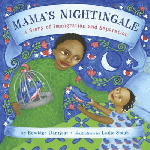
Saya’s mom is sent to a detention center for being undocumented. It’s been a long time since her mom’s been home and the only thing she finds comfort in is her mother’s greeting on the answering machine. After Saya accidentally deletes the answering machine greeting, Mama sends bedtime stories inspired by Haitian folklore on a cassette tape. Saya decides she will write a story of her own, one that could potentially help get her mother back home.
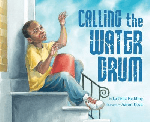
Henri’s uncle invites him and his parents to leave Haiti and come to New York City to live with him. Hoping for a better life, Henri and his parents leave on an old rickety boat. The boat overturns in the middle of a storm and Henri’s parents float further away as he calls to them. When he finally makes it to his uncle’s home in New York, he becomes withdrawn, unable to speak. One day he takes a bucket and uses it as a drum. It calls to him so he starts using it to cope and express his emotions.
This book is written by Areli Morales, a DACA ( Deferred Action for Childhood Arrivals) recipient who shares her own story as an undocumented immigrant child. In this moving picture book, Areli has to leave her home and Abuelita, to join her parents and her older brother Alex in New York. After her classmates bully her for not knowing English she learns about the term “Illegal”. Areli struggles with this imposed identity and the heavy consequences that could arise should anyone find out about her legal status. In the end, we see Areli give herself permission to dream and to exist just as she is.
The conversations you have with your child are creating a (1) rich vocabulary, (2) creative thinking, (3) conversation skills (e.g., taking turns, listening), (4) self-awareness and expression, and an attending mindset (e.g., making eye contact, body language, reacting by smiling, etc.).
Building a storytelling, reading, and singing routine is a quick way to boost your child’s early literacy skills. Parents can also engage their children by discussing what items to put in their cart at the grocery store. For example, you could discuss what the household is making for dinner, the array of colors you see in the food packages, and the texture of fruits and vegetables. Use descriptive words such as “smooth, shiny” or “fuzzy, soft”.
Reading a wordless book can give you and your child a chance to make up your own story.
This September, Yolo County Library is joining with the American Library Association and libraries nationwide for Library Card Sign-Up Month, an initiative to remind every community member that a library card is the first step towards academic achievement and lifelong learning. All children ages 0-17 who sign up for a library card or use their existing library card in September will receive a special prize, and everyone who registers for a library card during the month will receive a free reusable bag.
“A library card provides opportunity for discovery and access to a rich and diverse world,” states Honorary Library Card Sign-Up Month Chair and author, executive producer, and founder of #1000BlackGirlBooks, Marley Dias. “It empowers you to make change and experience new stories.”
Los artículos pueden devolverse en los depósitos de libros de las sucursales de la Biblioteca del Condado de Yolo. Los depósitos de libros están abiertos las 24 horas del día, los 7 días de la semana. Los artículos que no quepan en las cajas de libros pueden devolverse durante el horario de apertura de la biblioteca.
¿Cómo puedo devolver las bolsas RAY?
Por favor, devuelva estos artículos a un miembro del personal de la biblioteca durante el horario de apertura.
Las organizaciones de amigos tienen diferentes directrices para las donaciones. Por ejemplo, los Amigos de la Biblioteca de West Sacramento aceptan donaciones de revistas de menos de un año de publicación. Póngase en contacto con ellos y vea si pueden aceptar su donación. Muchas gracias.
WiFi 24/7
¿Ofrece WiFi la biblioteca?
Sí, el WiFi está encendido y accesible dentro y fuera de nuestras sucursales las 24 horas del día, los 7 días de la semana. La red se llama PUBLIC y no se requiere una tarjeta de la biblioteca para conectarse.
La Biblioteca del Condado de Yolo ofrece una amplia variedad de servicios a los que puede acceder 24/7 con su tarjeta de biblioteca. El canal de Youtube de la Biblioteca del Condado de Yolo tiene consejos útiles para usar la biblioteca.
Career Online High School ofrece a los adultos la oportunidad de obtener un diploma de enseñanza secundaria acreditado y un certificado profesional en línea.
Pinterest de la Biblioteca del Condado de Yolo incluye sugerencias de libros para niños de 0 a 5 años, libros infantiles, actividades sobre la bondad, libros de una serie, libros que no puedes dejar de leer, lecturas para adolescentes, ideas para manualidades y mucho más.
El canal de YouTube de la Biblioteca del Condado de Yolo ofrece consejos útiles para utilizar la biblioteca.
Materiales de biblioteca
¿Cuándo hay que entregar los artículos?
Los CD, libros y revistas propiedad de la Biblioteca del Condado de Yolo se prestan por 3 semanas. DVDs y aparatos electrónicos se pueden prestar por 1 semana. Los kits de aprendizaje temprano se prestan por 4 semanas. Vea Periodos de Préstamo, Límites y Cuotas para más información. La mayoría de los artículos se renuevan automáticamente hasta tres veces; sin embargo, si otro usuario tiene un artículo en reserva, no se renovará. El período de renovación es de 21 días. Más información sobre la renovación automática aquí.
¿Qué hay de LINK+?
Todos los materiales de LINK+ tienen un periodo de préstamo de 3 semanas con una renovación
Puede devolver los materiales de LINK+ en cualquier depósito de libros de la Biblioteca del Condado de Yolo. No necesita recibo. Para confirmar que la biblioteca ha recibido el artículo, puede revisar su cuenta en línea o llamar al (530) 666-8005.
¿Qué es el programa Libros por Correo?
El servicio Books by Mail Libros por Correo de la Biblioteca del Condado de Yolo es para personas que no pueden acudir físicamente a una sucursal de la biblioteca.
¿Y si no tengo tarjeta de la biblioteca?
¿No tiene tarjeta de la biblioteca? ¡No hay problema! Eche un vistazo a esta página de información. Los residentes del Condado de Yolo pueden registrarse en línea para obtener una eCard para acceder a los servicios digitales. Alternativamente, OverDrive permite a los residentes del Condado de Yolo registrarse para obtener una tarjeta temporal y pedir prestados libros digitales y audiolibros usando un número de teléfono móvil. Si usted tiene una tarjeta de la biblioteca en línea, por favor visite su sucursal local para obtener una tarjeta física o llame al (530) 666-8005 durante las horas de apertura.
Cuentas de biblioteca
Si su tarjeta de la biblioteca ha caducado o si necesita actualizar su cuenta de la biblioteca con una nueva dirección, número de teléfono o correo electrónico – llame al 530-666-8005 o envíenos un correo electrónico.
Sigo teniendo una pregunta sobre mi cuenta. ¿Hay alguien que pueda ayudarme?
Llame a la Biblioteca al 530-666-8005 o visite su sucursal local durante las horas de apertura local.
Voluntarios
¿Pueden los voluntarios prestar servicio en la biblioteca?
Póngase en contacto con su biblioteca local para conocer las oportunidades de voluntariado. Para ofrecerse como voluntario en el programa de alfabetización familiar y de adultos Yolo Reads, póngase en contacto con nosotros en el 530-666-8019 o yolo.reads@yolocounty.gov
¿Cómo puedo apoyar el programa de alfabetización para adultos y familias de Yolo Reads?
El programa de inglés como segundo idioma, ESL, de la Biblioteca del Condado de Yolo está aceptando voluntarios. Para más información contáctenos al 530-666-8019 o yolo.reads@yolocounty.gov
While logged in, you also have access to The New York Times InEducation, which provides curated reading lists across 12 disciplines of study.
If you have questions about accessing the NYT, please contact NYT@library.ca.gov.
Find your next great read. Learn more about books and genres you like with Novelist Plus.
Still can’t find what you are looking for? Go to our catalog page and select “Make a Purchase Suggestion” under the Books and More drop-down menu.
Free access to The New York Times Online for 72 hours. Click on the “REDEEM” button. Then create an account or log in with your email address and password. For more information, please watch the short videos which can be found on the Research page. If you have questions about accessing the NYT, please contact NYT@library.ca.gov.
Find your next great read. Learn more about books and genres you like with Novelist Plus.

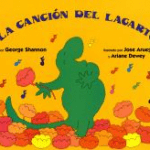 La Cancion del Lagarto por George Shannon